It's the trip of a lifetime, and this blog is bringing you with me.

Saturday, August 14, 2010

Porto!

Three words: Porto. Is. Amazing. (Full album here.)

Porto (or Oporto), Portugal's second city, is a beautiful, quaint city situated where the Duoro River (which starts deep in central Spain) meets the Atlantic Ocean. There are beautiful steel bridges, and the city seems to rise straight uphill out of the river. Technically, the area on the north shore of the river is Porto, and the area on the south shore of the river is Gaia.

Nathan and I arrived in Lisbon at about 8 am on Friday morning. We went to our (amazing) hostel, ate breakfast, and then I left right away for the Lisboa Oriente train station (pictured) for the 3-hour train ride from Lisbon to Porto. Between the overnight train from
Madrid and the 7-hour round-trip journey to Porto and back, I spent about 16 out of these 24 hours on a train. Back on solid ground, I still felt like I was rocking quite a bit. All in all, it was worth it.

I arrived in Porto, took a local train into downtown Porto, and then walked down the hill to the river. Within the first few hours of being in Portugal, it became clear to me that the Portuguese are, in general, extremely friendly and helpful. First, a teenage boy on the train opened up my Lisbon map and talked about his favorite sites in the city. Then, a girl on my train took me to the ticket machine so I could buy a local train ticket and stayed until I had finished the transaction. After that, a local man had me follow him down the hill from the local train station to the river.

Porto (technically, Gaia) is home to the port lodges of all the famous port-producing families. Overwhelmingly, they have British names. And so begins the story.

Many people around the world appreciate port wine ("port"), but as a nation, I'd venture to say that no one loves it quite as much as the British, not even the Portuguese. I am currently reading a massive Churchill biography, and after almost every formal dinner, he rounded out the evening with some port. The British also love French wines such as Bordeaux and Champagne, but during past wars and international disputes, there were times when they could not get French wine from across the English Channel. Seeking other sources, they looked to Portugal, but the Portuguese coast was too hot to ship still wine to England without spoiling it. Therefore, the winemakers began to fortify the wine. Instead of letting all of the grape sugar ferment, they let fermentation consume about 50% of the grapes' sugars, and then they pour in brandy, which kills the yeasts immediately and ends fermentation. This creates a sweeter, fortified wine, and port can ship in heat without "cooking" and ruining the wine. Thus, the British obsession with port was born.

Two quick asides. First, it's interesting that port is so acclaimed given that the winemaking method is so different from practically any still wine in the world, which are mostly made using fairly uniform methods. Second, port is not the only beverage that grew in popularity due to a challenge in meeting British requests. The British had many thousands of troops in India for decades, and in order to ship beer to them without spoiling, they had to make the beer extremely "hoppy"--i.e., bitter. Thus, "India Pale Ale" (IPA), was born.

Back to Porto. I walked down to the river, and then did the extremely crowded Porto Pilgrimage walk across the bridge.


After living to make it across the bridge, I walked about 1/3 of a mile along the river and then up the hill to Taylor's. It has been quite hot in Portugal--roughly 100 degrees in Lisbon today--so walking up the steep, narrow streets was fun, but got me a little winded.

I made it to Taylor's just in time for a free English-language tour of the facilities in Gaia. This is where a bit more explanation is required. Port is aged in oak and bottled in Gaia, but the grapes are grown about 100 miles up the Duoro River in eastern Portugal (and the area where these vineyards lie has been named a UNESCO World Heritage site). Grapes need to stay cool and be crushed as soon as possible after harvest, so the grapes are also crushed and the juice is fermented near the vineyards. Historically, all of the crushing was done by foot, and 5-10% of Graham's is still crushed by foot (which takes about 10 men 3-5 hours per tank)--the rest is done by silicon crushers today). The young port wine was then sent down the treacherous Duoro to Porto so that the barrels could be collected and the port wine aged near the coast. This river journey used to take about a week, and often boats, barrels, and lives were lost.

Today, however, roads reach the terraced wilderness where these vines are grown, so they can truck the young port to Gaia instead of risking the river.

Taylor's and Graham's were great. I chose these two port lodges because they make some of the best ports in the world. Both of them had very high-quality tours, and I learned a great deal about the science of port (e.g., reduction vs. oxidation during the years in oak) as well as how they make the different styles (ruby, vintage, late-bottled vintage, tawny, Colheita, white). At Taylor's, I was fortunate enough to try the 2007 Vintage Port, which was delicious and extremely impressive. I'd say 95-96.

At Graham's, I was blessed to be able to experience the greatest tasting flight of my life: 1985 Dow's Vintage Port, 1994 Quinta do Vesuvio (single-vineyard) Vintage Port, and 2000 Graham's Vintage Port. Every single one was an absolute blockbuster, but I didn't prefer any one to the others. They were all simply amazing representations of their respective house's traditional styles, as well as a great example of how top-quality vintage port ages over 25 years. I'd say 96-97 for each. Simply amazing--I will never forget it.

After Graham's, I caught the Graham's bus, which took me down the hill and across the bridge, and I said goodbye to Porto. But since I have loved Lisbon and Porto so much (and will likely love Lagos and the Algarve, as well), I doubt it was goodbye forever. It would be fun to bring Jen to Portugal, and I know Matt Dean (shout-out) will need to do this now, so maybe the four of us can make the trip down the road.


Again, the full album is here. I loved Lisbon and cannot wait to write about it, but I need to be up in about 4 hours, so this will have to do for now. Please forgive any typos--I will fix them in the next couple days. Look for Lisbon and Lagos posts over the next day or two!

- R

Madrid

Hello from across the Pond!

I wanted to post in Madrid, but the Internet connection there was not reliable and I was not able to make it happen. Tonight, I am in Lisbon, and I decide it's about time I post something. There are a few pictures on this post, but the main album is available here.

Nathan and I flew from SFO to Madrid (via Atlanta) with no problems at all. Jen drove me to the airport at about 5:30 am on Tuesday (I posted a picture of my last view of the Bay Bridge for a while), and I took off at 8:30 am.


We landed in Spain around 9:45 am Madrid time on Wednesday. At the airport in Madrid, we just jumped on the Metro, went to the city, and checked into our first hostel. I called Jen on Skype to let her know that we had arrived, and by noon, we were out and about.


Madrid was quite interesting. I was struck by a few things. For one, a very high proportion of younger northern Europeans speak English as a second language, but in Spain, English-speakers were few and far between. For the most part, I would have made my high school Spanish teacher proud, because I remembered a lot of nouns and basic infinitives, but I can no longer conjugate (beyond simple present tense) to save my life, so when things became complicated, I threw the conversation over to Nathan. Also, the Spaniards were not nearly as friendly as I expected them to be.

In addition, Iberians
love their ham. For the Spanish, this is jamon, and if you're going to be traveling to Madrid, I sure hope you like it. The traditional jamon for Spain is Serrano-style, and it's basically Spain's answer to prosciutto. It's not like the US where you have ham, turkey, beef, and probably five other meats any time you order a sandwich. In Madrid, there is a good chance that your choice is jamon or no jamon. I love prosciutto, so I didn't mind so much, but Nathan grew a little tired of it after eating it twice in the first day. On the first day we ate jamon sandwiches for lunch, and then had a plate of jamon slices at dinner. Then the next day, I had a jamon sandwich for dinner. (Today in Lisbon my choice of sandwich was ham & cheese or toasted ham & cheese, but in Portugal the ham is like the ham you would think of in the US.)

Overall, Madrid was neat, but I wouldn't say I loved it. It's in the middle of a desert or semi-desert region, and I didn't feel that there was much natural beauty, which adds a great deal to cities for me. It was also difficult to navigate, as the streets wind every which way, but that can be kind of fun since every block or so you stumble on a new little plaza. Parts of it reminded me a lot of NYC's Soho and Upper East Side neighborhoods, and the area that most reminded me of the UES had a park with a look and feel that was very similar to Central Park--it was even home to El Museo del Prado, just like the UES has the Met right on Central Park.

After our first few hours of walking around the city, Nathan and I started wondering where all the people were. There were people around, but not nearly as many as you would expect for the largest city in and capital of Spain. What we found was that the Spanish siesta custom, which is essentially staying indoors, or even napping, during the warmest part of the day, is still going strong. Madrid was very hot and also quite humid, and we drank more than 3 liters of water each day there. After about 8 pm, when the city started to cool a bit, the streets were full and the plazas started to fill with life and activity.

After our first day in Madrid, Nathan did a Google search to find out what we needed to see on day two, and I'm really glad he did. We toured the main royal palace for Spain, and it was amazing. Right across the royal square was the city's main Catholic cathedral, and we toured that, as well (Pope John Paul II visited to give his blessing to the cathedral in 1994, and a great deal of the memorabilia in the cathedral related to his visit). I had not been in a European cathedral for almost a decade, and I forgot just how cavernous they are inside. They are absolutely massive and, often, beautiful.


After this, Nathan and I visited the site of a ruined Egyptian pyramid (in Madrid--who knew?), got some churros with chocolate, went to see the bull-fighting arena, and then got our bags and went to the train station. Eventually, we filed into our sleeping cart and laid down for the 10-hour overnight trip to Lisbon.


Again, there are some cool pictures of Madrid in the
album, so please take a look. Also, I'm going to post about Porto and Lisbon separately so it's easy to follow along and look at each city individually. Porto and Lisbon were amazing, and tomorrow we are heading to Lagos, which lies along the Atlantic Ocean on Portugal's southwestern coast. I cannot wait to spend a few hours on the beach! I hope everyone is doing well back home, and I will be sure to check in again soon.

- R

Wednesday, June 16, 2010

Itinerary

The last two weeks have been quite productive. Today marked T-minus 6 weeks to the bar exam, and I think my preparation is coming along well. (It's been the better part of the day every day, so it had better be!)

In addition, I have spent a fair amount of time wrapping up the itinerary, deciding which places need to be cut, which need a little more time, etc. I have also started booking hotels and hostels, activities, tours, and a rental car (for Tuscany). I also booked Jen's plane ticket (into Venice, out of Rome) and planned out all the train routes and times for the entire trip (thanks, RailEurope.com). Very fortunately, everything seems to be lining up perfectly. Seriously--when you are juggling this many cities and factors, there is a huge potential for things to conflict. For one, Nathan and I have agreed on everything--cities to hit and cities to skip, time spent in each place, accommodation (price vs. quality), etc. Also, when I finished planning the Madrid-to-Cinque Terre leg of the trip, it lined up perfectly that Jen would fly into Venice to meet me by leaving on a Friday, she would the miss two weeks of work that include Labor Day, and her break will span three weekends. The route developed pretty naturally, and getting accommodations in each city has been extremely easy. Add on the fact that both tourism and the Euro are down, and I have felt extremely blessed in planning so far.

It's a bit late and I have class in the morning and a little more reading for tonight, so for now I will just post the list of cities and then discuss a few thoughts about the trip.

And without further adieu, the itinerary for Europtrip 2010 (aka "The Euro in 2010"):
In thinking about the aspects of the trip that excite me the most, a few things come to mind. For one, this is the first real extended break that I have had in the past seven years. Between engineering school, summer classes, summer internships, working between college and law school, law school, law review, my two law school summers at firms (while writing on to the law review or grading law review write-on packets), and now bar preparation, I have not had any extended down time since I was 18 years old. So first, I'm excited for a bit of a break.

Second, I am excited to travel through Italy with Jen. We have always wanted to travel through Italy together, and this presented the perfect opportunity to make it happen.

Third, I cannot wait to spend some time in some of the world's truly great cities. I feel privileged to live right near what I consider to be one of them--San Francisco. What makes a city one of the world's great cities, in my mind, is that you cannot go for a short period of time and feel like, "Oh yeah, I really got all that place had to offer. My curiosity is fully satisfied." From its diverse neighborhoods, raw intellectual power, Golden Gate Park, cultural offerings, culinary scene, and incredibly beautiful wine country and natural surroundings, you cannot just take in a place like this in a weekend. That's why I have given Rome, Paris, and London each four full days. Yes, of course you want to see the sights and the notable museums, but I really believe that you should get out, walk the streets, and really fade into cities like those to get the full experience. I've never been to Rome or Paris, but I spent a few days in London when I was 16 (almost a decade ago--a realization that shocked me), and it made a huge mark on me. In my mind, these are great cities in their own rights, but they are put "to 11" by their incredibly rich histories. For example, I will never forget the moment while walking around London with my British Literature class when our guide pointed to a commonplace-looking street corner and said, "And Charles I was beheaded right there in 1649." Our law, our culture, our history, our philosophies, and literally the western world as we know it have been shaped in and by these cities. They are amazing in their present forms, but to me, it is their present forms interwoven with their rich histories that makes them so fascinating.

Fourth, I am excited to be doing the great majority of the trip (save for much of Italy, Paris, Brussels, and the UK) with Nathan. It will be great to be with a good friend while taking in so many new countries and cities. So I am looking forward to a lot of bro time. Indeed, more than Nate would ever want. (He is going to be blogging the trip, as well.)

I am also looking forward to a few other notable things. I am going to be able to see our expat friends, Keenan and Lily, while I am in London. Keenan works for Jen's consulting firm, Duff & Phelps, and transferred to London over a year ago. He and Lily became fast friends with Jen and me when we moved to the Bay Area, and they have been more than generous to offer to let me stay in their flat. I am really excited to see them in their new city, and it will be great to see some familiar faces after such a long trip.

In addition, you tend to meet some great people when you travel. Last summer in Australia, we met Mike and Lora from Toronto, and we had a great time with them. Already, I have been e-mailing with one of the hotel employees in the Amalfi Coast because he is pursuing his M.S. in Mechanical Engineering with a focus on clean technologies. (I should also mention another friend from the Australia trip: Markus from Germany. After about 30 minutes, he offered to let me stay with him in Germany, and he showed great emotion while describing how much he missed sausages and real beer.)

I am definitely looking forward to the Interlaken, Switzerland stop on the trip. I expect to be suffering from severe city fatigue at this point, so three days to relax and hike in the Alps will be much appreciated.

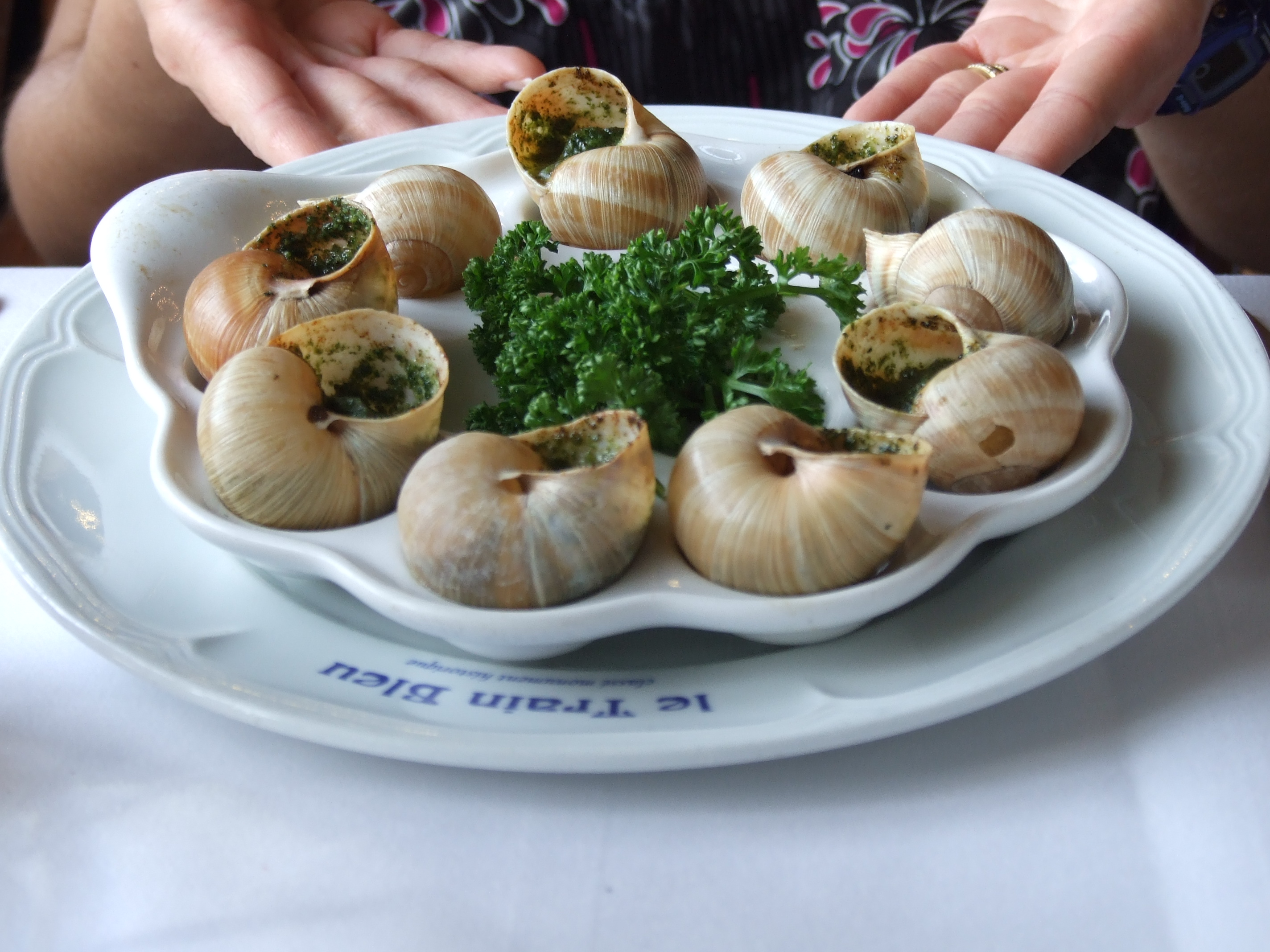
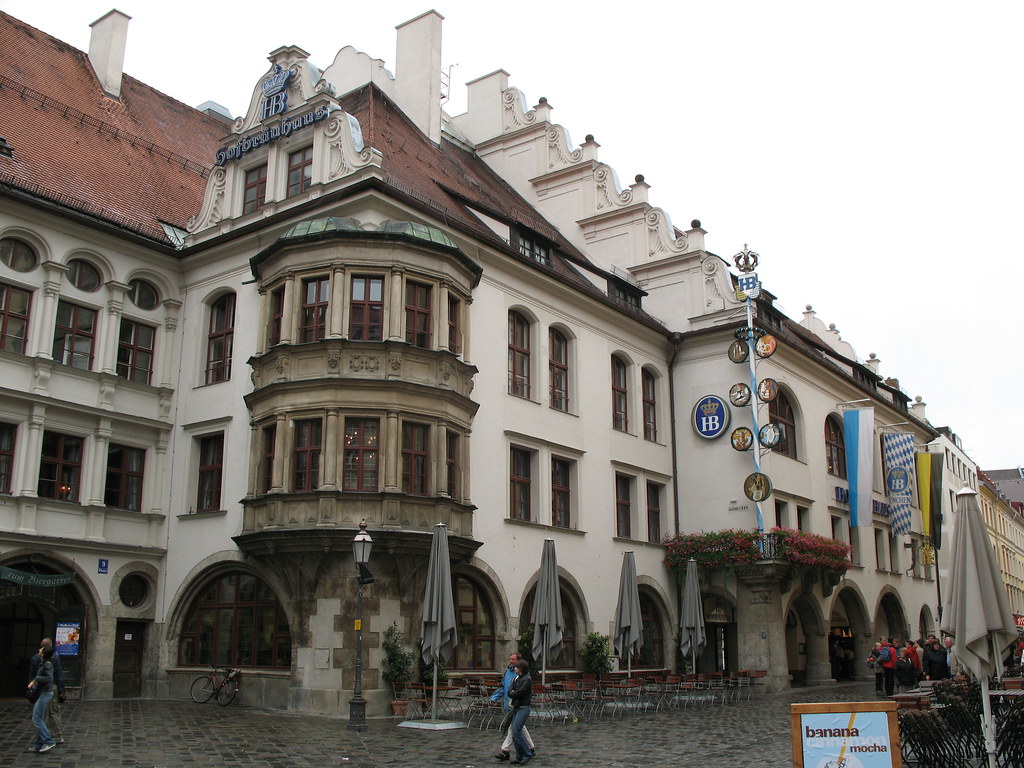
And finally, I am excited for everything I am going to learn and experience for the first time. From escargot in Paris, to the stone-walled hill towns of the Tuscan countryside, to the beauty of Lauterbrunnen Valley, to the 200th Anniversary Oktoberfest celebration in Munich (and the city's world-famous HofbrÀuhaus), it's going to be an amazing ride, and I know I am both privileged and blessed to get to do this. Until then, wish me luck in my bar studies! Thanks for reading.